DIY vs. Professional Water Leak Detection: Pros, Cons, and What's Changed
An honest comparison of DIY checks, professional leak detection, and smart sensors, with the real trade-offs and costs of each.
Co-written with AI assistance from Claude Opus.
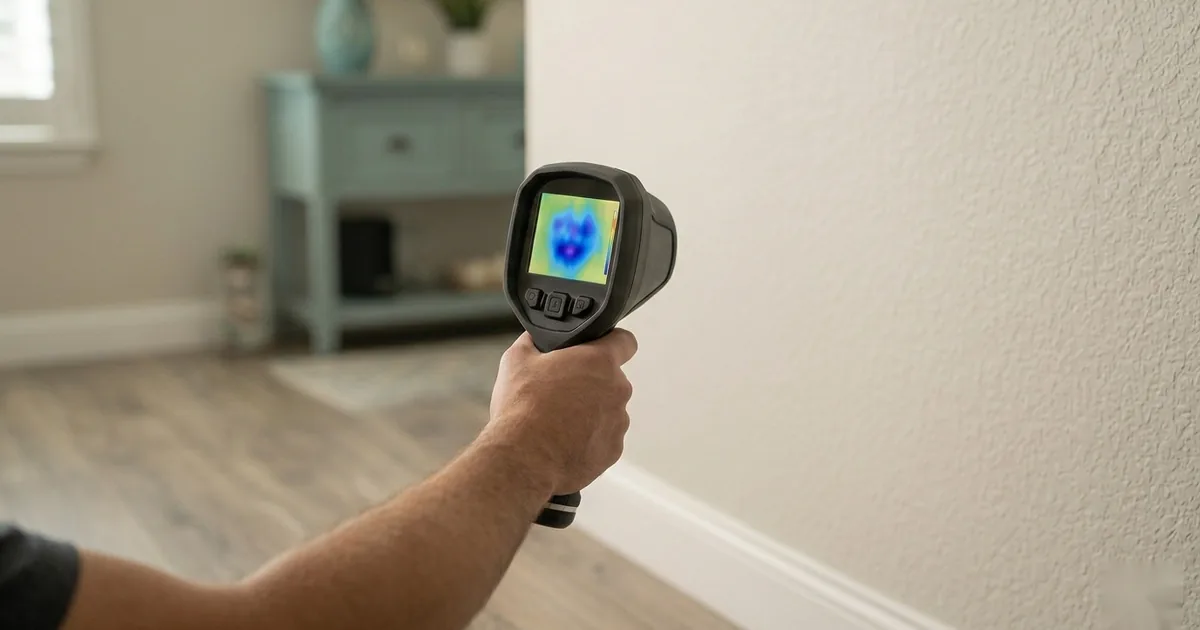
Three ways to find a leak, each with real trade-offs
When it comes to catching water leaks, property owners have traditionally had two options: do it yourself, or call a professional. A third option, always-on smart sensors, has joined them and changed the calculus. None of the three is perfect, and the honest answer is that they solve different problems. Here is a straight comparison so you can decide what fits your property.
DIY leak detection
This is the hands-on approach: visual inspections, checking under sinks and behind appliances, watching the water bill, and using inexpensive tools like moisture meters or dye tablets for the toilet.
Pros:
- Cheap or free. Mostly your time and a few dollars in basic tools.
- No appointments. You can check whenever you want.
- Builds real familiarity with your own plumbing.
Cons:
- Only as good as your last check. A leak that starts the day after you look can run for weeks.
- Misses the hidden stuff. Leaks inside walls, under slabs, or in spots you never inspect stay invisible.
- Depends entirely on someone remembering, and on being on site. Most of us are not checking behind the water heater on any regular schedule, and at a business it is rarely anybody’s named job.
Best for: routine upkeep and catching obvious problems, as a baseline habit rather than a safety net.
Professional leak detection
Professionals bring specialized equipment, acoustic listening devices, thermal imaging, moisture mapping, and pressure testing, to pinpoint leaks you cannot find on your own, including hidden ones under slabs or inside walls.
Pros:
- Finds what you cannot. The right tools and expertise locate difficult, concealed leaks precisely.
- Accurate diagnosis. A pro can tell you the source and severity, not just that something is wet.
- The right call when you know there is a leak but cannot find it.
Cons:
- Costs money per visit, and prices vary with the complexity of the job.
- It is reactive. You call a professional after you already suspect a problem, which usually means some damage has occurred.
- It is a snapshot, not ongoing coverage. They find today’s leak; they are not watching for tomorrow’s.
Best for: diagnosing a known or suspected leak you cannot locate yourself, and confirming the extent of damage.
Smart sensor leak detection
This is the newer option: small wireless sensors placed in leak-prone spots that monitor continuously and alert you the instant they detect water, often paired with an automatic shutoff valve that can stop the flow on its own.
Pros:
- Always on. It watches 24/7, so nothing depends on you remembering to check.
- Immediate. You are notified the moment water appears, not days later, which is what keeps a leak from becoming mold or major damage.
- Reaches you anywhere. Alerts come to your phone whether you are on site, at another location, or traveling.
- Can act on its own. Paired with a shutoff valve, it stops the water without waiting for you.
- No expertise required. Place the sensor, and it does the watching.
Cons:
- Covers where you place it. Sensors protect the spots you put them, so placement in the high-risk areas matters.
- It is about early detection and prevention, not diagnosing a leak already buried inside a wall, which is still a job for a professional’s tools.
Best for: always-on prevention, catching leaks the moment they start so they never escalate.
What actually changed
The old DIY-vs-pro debate framed leak detection as a choice between cheap-but-manual and accurate-but-reactive. Both share the same blind spot: they only work when someone is actively looking, and by the time anyone looks, the water has often been running for a while.
That blind spot widens with every additional door. One house has a handful of places to check and one person who might check them. A dozen rental units, three locations, or a building that empties at 6pm has more risk and fewer eyes, and the hours nobody is there are exactly the hours a leak runs unopposed.
Smart sensors changed that by removing the “someone has to be looking” requirement. They turn leak detection from an occasional action into a constant, background state, affordable, always on, and requiring no expertise. That is the middle ground the old options never offered.
They work best together
This is not really about picking a winner. The strongest setup uses all three: stay handy with DIY habits, call a professional when you need to locate or diagnose a hidden leak, and let smart sensors provide the continuous, always-on layer that catches problems the moment they start.
Our spooresLEAK sensor and spooresVALVE automatic shutoff are built for that always-on layer, the one that never sleeps and never forgets to check.
Join the waitlist to be first in line for our leak detection and shutoff devices.