Smart Home Water Protection: What It Is and Why It Matters
The plain version: a sensor that watches for water, an app that tells you the moment it finds any, and a valve that shuts the water off.
Co-written with AI assistance from Claude Opus 4.8.
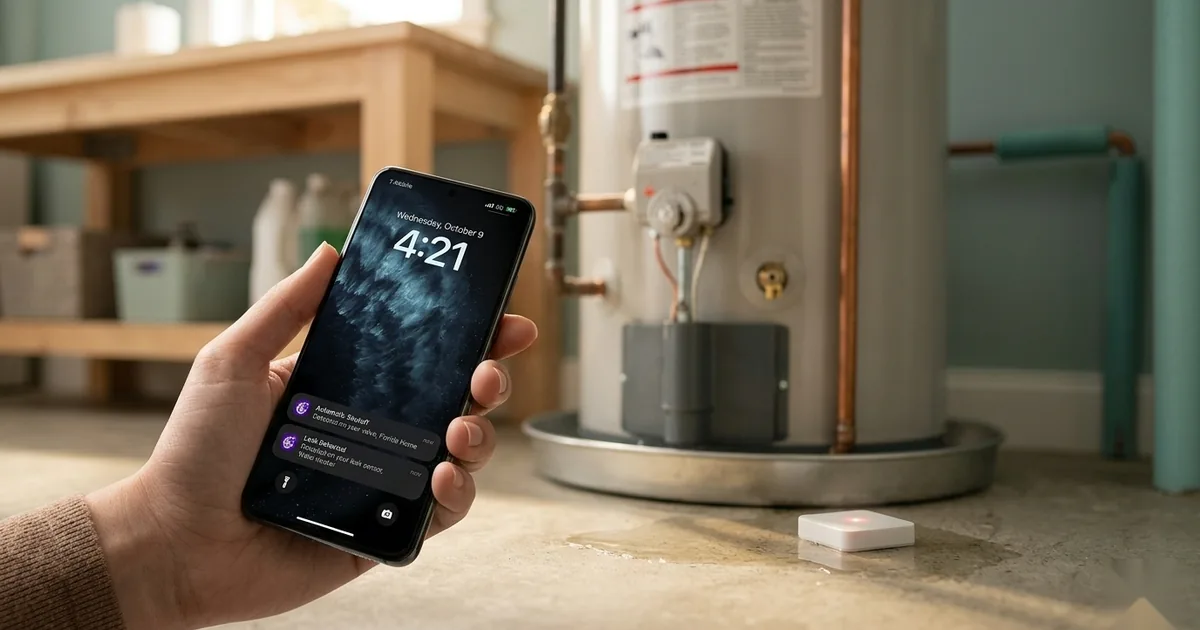
Let’s clear the air on what “smart” actually means here
“Smart home,” “connected,” “IoT,” these words get thrown around so much they have nearly stopped meaning anything. So let’s be straightforward. Smart home water protection is a simple idea with three parts: something that senses water, something that tells you about it right away, and something that can stop the water for you. That is it. No engineering degree required.
If you have ever worried about a leak while you were at work, asleep, or on vacation, this is the technology built for exactly that worry. Here is how it works.
The three pieces
1. The sensor: something that watches for water. A small, wireless device you place where leaks are likely, under a sink, behind the washing machine, next to the water heater, in the basement. It sits there quietly and monitors continuously. Many sensors, including our spooresLEAK, also track conditions like temperature and humidity, which matters because those are the conditions that lead to mold and frozen pipes.
2. The notification: something that tells you now. The moment the sensor detects water, it sends an alert straight to your phone through an app. Not the next time you happen to check the basement, immediately. Whether you are in the next room or on another continent, you find out the instant water shows up.
3. The shutoff: something that stops the water. This is the piece that turns an alert into protection. An automatic shutoff valve, like our spooresVALVE, can close your water supply on its own when a leak is detected, cutting the flow before a small drip becomes a flooded floor. Even if you cannot get to it, the water stops.
Put together, the workflow is simple: detect, then notify, then shut off. Sense the water, tell you about it, and stop it, all in the time it used to take you to even notice something was wrong.
Why this is a step change from the old ways
For decades, protecting a building from water meant one of two things, and both have serious limits.
Visual inspection. You check under the sink now and then, glance at the water heater, keep an eye out. It is better than nothing, but a leak that starts the day after you look can run for weeks before your next check. You cannot watch every hidden spot around the clock, and the dangerous leaks are always in the places you rarely look.
Basic moisture alarms. A standalone alarm that beeps when it gets wet is a step up, but only if you are home to hear it. Beeping in an empty basement while you are at work or away does nothing to stop the damage.
Smart protection closes both gaps. It watches continuously, so nothing depends on you remembering to check. It reaches you anywhere, so being away no longer means being blind. And it can act on its own, so protection does not wait for you to get home. The difference between an alarm and a smart system is the difference between being told about a disaster and preventing one.
Why it matters
Water damage is common, expensive, and fast. Mold can start within 24 to 48 hours of a leak, and the average water damage claim runs into the thousands. The entire value of smart water protection is that it compresses your response time from days, however long until you happen to notice, down to seconds. Against a threat measured in hours, that speed is the whole point.
It also buys something harder to measure: not having to think about it. The house watches itself, and you only get involved when there is genuinely something to handle.
Getting started is meant to be simple
The whole idea is accessibility. You should not need to be technical to protect your property from water. A sensor you place yourself, an app on the phone you already carry, and an optional shutoff valve for hands-off protection: that is the entry point, and it is designed to be exactly that easy.
Spoores began with water for a reason, it is where the need is most immediate, but the same detect-notify-act approach extends across everything a connected home can keep an eye on.
Join the waitlist to be first in line for our smart leak detection and shutoff devices.