Water Damage Is Bad. The Mold That Follows Is Worse.
Most people worry about the water. The bigger threat is what grows after it: the timeline from leak to mold, and what it does to health.
Co-written with AI assistance from Claude Opus.
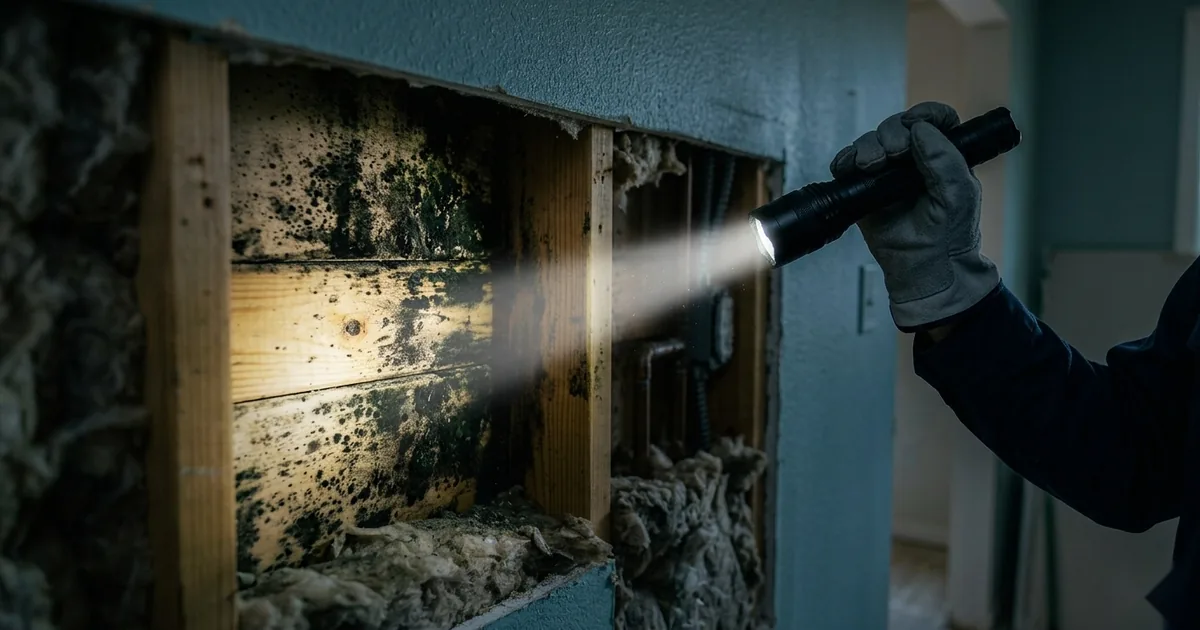
The water is not the part that hurts you most
When people picture water damage, they picture the obvious stuff: a stained ceiling, a warped floorboard, a soaked rug. That damage is real, and it is expensive. But it is not the part that lingers, and it is not the part that puts your family’s health on the line.
The real threat is what shows up after the water: mold. Water damage is a one-time event you can dry out and repair. Mold is a living thing that spreads, keeps spreading, and gets into the air you breathe. Understanding the difference is the difference between a repair and a recurring problem.
From leak to mold in 24 to 48 hours
Here is the timeline that surprises most property owners. Mold does not need a week to gain a foothold. Given moisture, warmth, and something organic to feed on, which describes the inside of nearly every wall in nearly every building, mold can begin growing within 24 to 48 hours of water exposure.
That short window is the whole game. A leak found and stopped on the first day is a cleanup. The same leak left alone for a weekend is the start of a colony. Mold does not wait for you to get around to it, and the longer moisture sits, the more established, and the more stubborn, the growth becomes.
What mold actually does to your health
Mold reproduces by releasing spores into the air. You breathe those spores in without knowing it, and for a lot of people the effects build slowly enough that they get blamed on something else. Common reactions include:
- Respiratory trouble: coughing, congestion, wheezing, and a scratchy throat that will not clear.
- Allergic reactions: sneezing, itchy eyes, skin irritation, and worsening asthma.
- Persistent, hard-to-place symptoms: headaches, fatigue, and a general “off” feeling at home that improves when you leave.
Certain molds, including the toxic black mold people worry about, can produce compounds that make these effects more serious, especially for children, older adults, and anyone with a compromised immune system. The tricky part is that these symptoms rarely arrive with a label. They feel like allergies or a cold that never quite ends.
Why prevention beats remediation, every time
Once mold is established, getting rid of it is a real job. Remediation can mean opening walls, removing material that cannot be salvaged, and treating the area so the growth does not return. It is disruptive and costly, and it only addresses the mold you can find.
Prevention is a different equation entirely. If the water never sits long enough for mold to start, there is nothing to remediate. That is why the smartest money in water damage is not spent on cleanup. It is spent on catching the leak inside that 24-to-48-hour window, ideally in the first hour, before mold is ever part of the story.
Where detection fits
This is exactly the gap smart water monitoring is built to close. A sensor that watches for moisture and tracks conditions like humidity does not get tired, does not skip the spots behind the appliances, and does not wait for the stain to show up on the ceiling. Our first devices, spooresLEAK and the spooresVALVE automatic shutoff, exist for this reason: catch the water fast, and stop it, so the far more serious mold problem never has a chance to begin.
Most companies in this space talk only about protecting your property. That matters, but it undersells the point. The leak is the event. The mold is the consequence. Stopping the first is how you avoid the second.
The takeaway
Dry out a flood and you have a repair. Ignore a leak for two days and you may have a health problem living in your walls. Water damage is bad, but the mold that follows is the part that keeps costing you, in dollars and in air you should be able to trust.
Catch the water early, and you never meet the mold. Join the waitlist to be first in line as we roll out our leak detection and shutoff devices.